Showing posts with label science. Show all posts

Tuesday, July 15, 2014

Water Can Be...


Water is an important part of the earth's environment.  This picture book by Laura Purdie Salas uses poetry to explore the many things that water can be -- from garden soaker, to thirst quencher, to drink cooler and fire snuffer, among others.  Illustrations by Violeta Dabija add to the mood of each page.  Back matter including a glossary and explanatory material for each water property add to the usefulness as a classroom resource for primary science units on the forms of water.

Tuesday, July 1, 2014

Plant a Pocket of Prairie


The author/illustrator team of Phyllis Root and Betsy Bowen have produced another winner about Minnesota ecosystems--this time the native prairie of southern and western Minnesota. Readers are encouraged to plant a pocket of prairie to help reestablish that rich ecosystem of birds, insects, flowers, grasses and other features that we have nearly lost.  Back matter includes more information on the plants and animals featured, as well as the prairie ecosystem in general.  A great classroom resource for intermediate level science or social studies units studying Minnesota ecosystems.

Friday, January 17, 2014

Hawk Ridge; Minnesota's Birds of Prey


Minnesota ornithologist, Laura Erickson, has created another wonderful book about the birds of Minnesota--this time with a focus on raptors.  Twenty raptor species are profiled in this book including vultures, ospreys, eagles, harriers, kites, hawks and falcons.  Information includes nesting, breeding, and migration habits as well as any special signature traits of the species.  The introduction includes a history of Hawk Ridge near Duluth, as well as information on the challenge of counting and banding hawks there.  Illustrator Betsy Bowen, normally a woodcut artist, switches to painting with acrylics for this second collaboration with Erickson.  This is an excellent classroom resource for high school students studying raptors and bird migration.

Monday, November 11, 2013

Scaly, Spotted, Feathered, Frilled: How do We Know What Dinosaurs Really Looked Like?


Not your ordinary dinosaur book, this new title by Catherine Thimmesh, looks at how paleoartists try to figure out what dinosaurs actually looked like?  Did they have scales?, feathers?, maybe both?  As scientists learn more about how and where dinosaurs lived, the new evidence changes how artists portray them.  Filled with historic and current illustrations, this fascinating book will appeal to dinosaur enthusiasts, and young artists alike.  It may be a resource for science classes studying dinosaurs.

Friday, October 18, 2013

Not a Buzz to be Found; Insects in Winter


(I heard snow mentioned in the forecast today--time to add winter to our vocabulary again.)

In the warm weather, insects are everywhere. Where do they go during the winter? This book shows what twelve insects do to survive the winter; including for example, the Monarch butterfly who flys south, or the honeybees who huddle together in their hive. Written by Linda Glaser with illustrations by Jaime Zollars, this could be a classroom resource for insect units. Back matter includes additional information about each insect.

Monday, September 30, 2013

Twelve Owls


Owls are fascinating predators found in many Minnesota locations.  This book includes profiles of twelve owls known to live in or migrate to Minnesota; ranging from the tiny saw-whet to the magnificent great gray owl.  In addition to general identification and habitat information,  the book includes information on how the environment affects each owls' life pattern and habitat. Written by Laura Erickson, with life size paintings of each bird by Betsy Bowen; this will be a good resource for predator units in science or biology classes.

Friday, September 27, 2013

Birds in Our Backyard


Minnesota is home to over 400 species of birds throughout the year.  This book will help young readers learn about Minnesota birds as they are seen during the four seasons.  They will also learn about travel and migration, nests, habitat, and the favorite foods of various birds.  The text, in poetry form, is written by Adele Porter, and the beautiful color photographs by Bill Marchel bring to life the world of Minnesota birds.  This is an excellent resource for elementary bird units, and can be enjoyed by readers any time of year.

Wednesday, September 11, 2013

Minnesota Bug Hunt


What is that fearsome creature on the cover of this book?  It's a Red Milkweed Beetle, and it lives on milkweed in the prairie/grassland habitat.  This book will provide readers an up-close-and-personal look at some of Minnesota's most interesting and unusual insects.  It is arranged by habitat (backyard, grassland/prairie, forest, pond, and oak tree), and provides information on three to six insects from each habitat.  Author Bruce Giebink (aka 'Bruce the Bug Guy') introduces readers to fun facts about each insect.  The detailed photographs by Bill Johnson allow readers to really see the features of each insect.  It will be a great resource for elementary insect units.

Monday, September 9, 2013

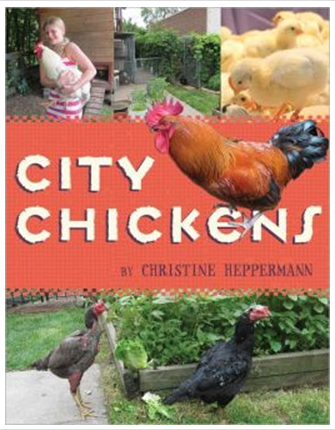
City Chickens

In this book, readers will learn about a unique animal shelter in North Minneapolis, called Chicken Run Rescue.  It provides shelter to chickens who may have been abandoned, maltreated, or have escaped from someone's yard.  Written by Christine Heppermann, this book tells the story of several chickens who have lived (or may still be there) at Chicken Run.  It also describes how the shelter got started, and how it operates each day.  Excellent color photographs and a colorful layout enhance the enjoyment of this book.  It could be used in classes studying farm/city animals; or as a model text for writing nonfiction at the upper elementary or middle school level.  It even offers food for thought for educators with a page discussing alternatives to baby-chick hatching units.  Overall, it is an excellent book on a unique subject.

Wednesday, July 31, 2013

A Leaf Can Be


Leaves are an important part of our ecosystem.  The can provide shade from the sun, or shelter from the rain, they clean the air, and help plants make food. In the fall, they can glide on the wind, turn the hillsides into beautiful colors, and catch the frost.  This simple picture book by Laura Purdie Salas helps children understand the many functions of leaves in our world.  Brief descriptions in the back provide additional insight on the function of leaves. The gentle collage-like illustrations by Violetta Dabija not only fit the words on the page, they also help ones imagination to take flight. The text received a Golden Kite Honor in 2013, and the book was a finalist for the Minnesota Book Award in 2013.  This could be used as a supplementary resource for science units on plants and trees at the primary level.

Tuesday, December 6, 2011

Swirl by Swirl; Spirals in Nature


Here is another jaw-dropping celebration of nature from the team of Joyce Sidman (poet) and Beth Krommes (illustrator).  This one features spiral forms found on animals and plants, or in the ocean and sky.  While the poetry is wonderful, the scratchboard illustrations steal the show.  Readers can spend hours finding all the spirals on these pages.  End notes add factual details for readers wanting more information about featured animals and plants.  This gorgeous book could be a resource for science, and possibly math classes (Fibonacci numbers).

Monday, October 10, 2011

Playful Slider


First published in 1993, this book would normally be outside the date range of this blog. However, I recently saw an advertisement where the University of Minnesota Press has rereleased it. If you missed it the first time, here is your second chance.
This book, written by Barbara Esbensen, describes the daily life of the American river otter. Unlike their more aggressive relatives in the weasel family (including badgers, wolverines, and skunks), river otters are known for their sense of fun and playfulness. The realistic illustrations by Mary Barrett Brown add to the enjoyment of this informative book.

Thursday, September 8, 2011

Dragonfly Door

The Dragonfly Door - a Mom's Choice Awards Recipient
Readers of this picture book about the life cycle will meet two insect friends, Lea and Nym, who are water nymphs living in a marsh.  One day Lea is missing and Nym looks everywhere for her.  Eventually Nym learns that Lea has died and gone to a new world to be a dragonfly.  It's a story about the life cycle, but with overtones about death and future life, possibly making it appropriate to use with grieving children.  Written by Minnesota author John Adams, with illustrations by Barbara Gibson, this is a simple story to share with young children.  Endnotes provide more detail about the life cycle of dragonflies.

Wednesday, September 7, 2011

Beaver, Bear, Snowshoe Hare; North Woods Mammal Poems

Beaver, Bear, and Snowshoe Hare
A combination poetry and science book, this includes poems about 21 animals found in the North Woods.  Poetry forms include: free verse, haiku, lullabies, lyric, narrative, and sonnets, among others.  The information for each animal includes a brief sketch, including their scientific name.  This is the work of two Minnesotans--Cheryl Dannenbring is the author, and Anna Hess is the illustrator.  Although the page layouts could have been more readable in spots; in general, this can be a resource for classes studying Minnesota animals.

Wednesday, June 15, 2011

Celebritrees; Historic and Famous Trees of the World

Celebritrees: Historic and Famous Trees of the World
Trees are the largest plants on earth.  This book introduces readers to fourteen famous trees from all around the world--from Methuselah (a bristlecone pine) to General Sherman (a sequoia), to the Tule Tree in Mexico, the Bodhi Tree in Sri Lanka, and the Boab Prison Tree in Australia. Written by Margi Preus, with acrylic, watercolor, and pencil illustrations by Rebecca Gibson, this might be a resource for 'tree' units in elementary science classes.

Monday, May 9, 2011

Birding Minnesota

Birding Minnesota
For serious bird enthusiasts, here is an in-depth guide to Minnesota birds.  Did you know that Minnesota is home to  over 400 bird species?  Arranged by biome (northern boreal, prairie, southern hardwood, northern deciduous, and the Twin Cities), the guide focuses on towns, cities, parks, and other locations around the state where birdwatching is especially good.  There are detailed maps, birds to be found at each site, food, lodging and camping information, and any hazards (poison ivy, etc.) for each area.  Written by Jay Michael Strangis, this is a resource for hard-core birdwatchers, and it might be a resource for high school biology classes.

Wednesday, April 27, 2011

Minnesota's Hidden Alphabet

Minnesota's Hidden Alphabet
Look at the natural world around you.  Can you find the letter A in a jumble of tree roots?, the letter I in a cattail?, or the letter O in a bird's nest?  Photographer, Joe Rossi traveled the state of Minnesota in search of all the letters of the alphabet, photographing scenes from Granite Falls to Chippewa National Forest, and from Bemidji to St. Paul.  Read this book to see what he found; and learn about the nature and plants/animals as they are described by David LaRochelle.  The illustrations and text make this much more than a simple alphabet book.  It could be a classroom resource for elementary art and science classes.

Monday, November 29, 2010

Big Belching Bog

Big Belching Bog
Minnesota is known for its many beautiful lakes.  No so much for the peat bogs that are scattered across the northern part of the state, including the Big Bog just north of Upper Red Lake.  This is the largest peat bog in the lower 48 states.  This (appropriately large format) book, written by Phyllis Root, introduces readers to the plants and animals that live in a bog.  Woodcut illustrations by Betsy Bowen add to the atmosphere of the bog.  More information about the plants and animals is found in the end notes. This book will be a useful addition to classes studying plants, animals, and Minnesota geography and environment.  Do bogs belch?  No one knows for sure, but this book will pique your curiosity.

Tuesday, October 12, 2010

Dark Emperor and Other Poems of the Night

Dark Emperor and Other Poems of the Night
In her latest book, Minnesota poet Joyce Sidman, features nocturnal animals and other sights and sounds of the woods at night.  Beautifully illustrated with linoleum cut designs by Duluth artist, Rick Allen, this is very comparable to Song of the Water Boatman, which won a Caldecott honor.  This will be an excellent classroom resource for elementary science classes.

Thursday, July 1, 2010

Flood!

Flood! (Ready-to-Read. Level 1)It's summertime and time for occasional nasty weather including floods, whether small flash floods or large ones with major damage.  This book is part of the series Learn About Natural Disasters.  It is a brief beginning reader that provides basic information about how floods happen and how we can try to avoid them.  Written by Marion Dane Bauer, with illustrations by John Wallace, the book includes some interesting facts about floods and general tips for what to do in a flood. It can be used as supplementary reading in primary science units about the weather.